
Looking for the best places to live in Edmonton for families means weighing education quality, daily safety, access to parks, and how easily your household can manage work, school, and errands. Across Edmonton, you’ll find neighbourhoods designed to support long-term residential living, offering reliable transit access, nearby schools, and practical services that help households settle with confidence.
This guide provides a detailed overview of neighbourhood strengths, school access, healthcare availability, transportation, and recreational options. By reviewing how different areas function day to day, you can explore neighbourhoods Edmonton offers and identify which locations align with your priorities before you move.
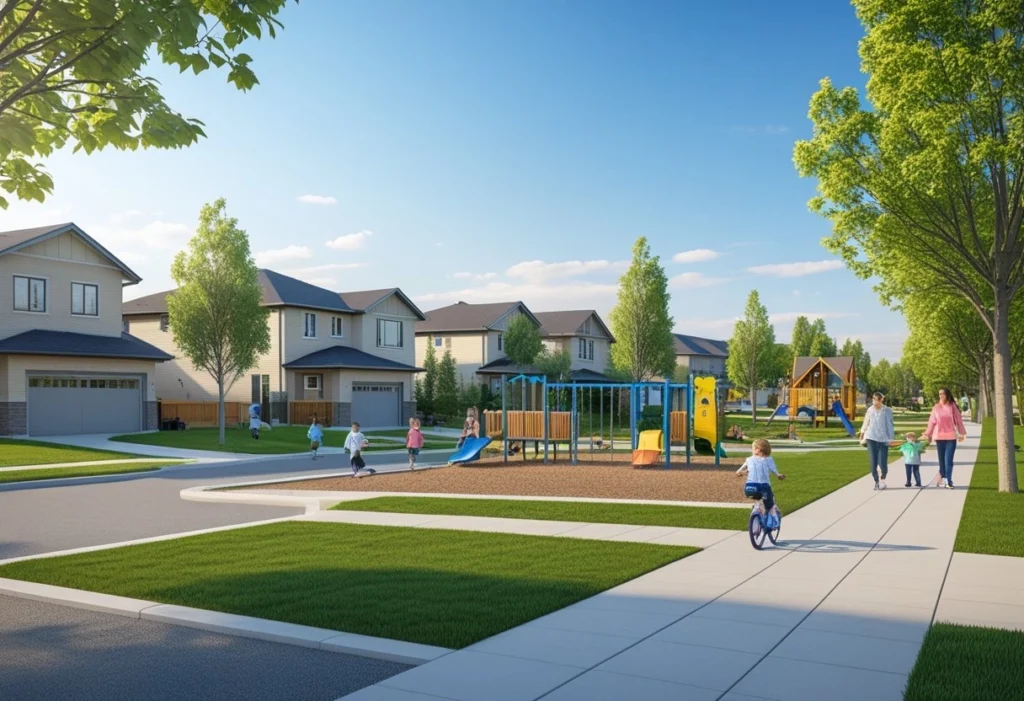
This guide walks you through top neighbourhoods, access to schools and healthcare, family-friendly parks and services, commuting options and newer communities that offer growth potential. Use these insights to match neighbourhood strengths to your family’s priorities and make the next move with clarity.
Top Family-Friendly Neighbourhoods in Edmonton
These neighbourhoods balance housing variety with practical access to schools, shopping, and outdoor spaces. Each area supports everyday living through nearby services, parks, and transportation routes, making them suitable for growing households seeking long-term stability.
Windermere Community Overview for Families
Windermere offers newer homes within planned residential developments, with property styles ranging from detached houses to townhomes and low-rise condos. Sidewalk networks, bike paths, and playgrounds are integrated throughout the area, allowing residents to move safely between green space, schools, and local destinations.
Shopping centers, medical clinics, and dining options are clustered nearby, reducing travel time for errands and appointments. Access to Anthony Henday Drive and Rabbit Hill Road supports efficient commuting across west Edmonton and into central employment districts.
Local schools serve elementary and junior high levels, with additional options available within a short drive. While prices trend higher than older districts, buyers gain modern construction, updated utilities, and amenities nearby that support everyday residential living.
Terwillegar Towne Community for Family Living
Terwillegar Towne is located near river valley trails and offers extensive outdoor access for walking, cycling, and seasonal activities. Homes vary in size and layout, providing flexibility for different stages of household growth while maintaining consistent access to parks and pathways.
Recreational facilities, transit routes, and organized programs help residents manage after-school schedules and weekend activities efficiently. Bus routes connect directly to major transit hubs, reducing reliance on driving.
Schools in the area include elementary and junior high options, with transit links supporting access to additional campuses. Neighbourhood design emphasizes visibility, walkability, and long-term residential planning.
Summerside Neighbourhood Guide for Families
Summerside is designed around a central lake that supports year-round recreation, including swimming, skating, and organized events. Housing options range from lake-adjacent properties to more affordable interior streets, offering varied entry points for buyers.
Retail services, grocery stores, and essential shopping are located nearby, keeping routine errands manageable. Transit service connects the area to other south Edmonton routes, though many residents prefer driving for flexibility.
Schools, childcare facilities, and structured activities contribute to consistent daily routines. Seasonal events and shared recreational features encourage participation while maintaining a stable residential environment.
Riverbend Area Home Options for Families
Riverbend features established streets, mature landscaping, and larger lot sizes, making it attractive to buyers seeking quieter residential settings. Detached homes dominate the area, often with generous yard space and traditional layouts.
Schools within the Riverbend cluster are well-regarded, and access to Whitemud Drive supports efficient east-west travel. Shopping and specialty services are available within a short drive.
Parks, sports fields, and maintained pathways support outdoor use throughout the year. While new construction is limited, the area offers consistency, long-term value, and stable residential patterns.
Schools and Education in Edmonton
Edmonton offers strong options across public, French immersion and post‑secondary pathways within short driving distances. You can expect neighbourhoods with top elementary and junior high scores, accessible immersion programs, and nearby colleges or universities for future planning.
High-Ranking Public Schools
You’ll find high-performing public schools concentrated in neighbourhoods like Terwillegar, Strathcona, and parts of southwest Edmonton. These schools typically report strong provincial assessment results, active parent councils, and robust extracurricular offerings in sports and arts.
Look for specific indicators when choosing a neighbourhood: school ranking reports, wait‑list lengths for popular programs, and the presence of before/after‑school care.
Consider catchment boundaries carefully; a house a block away can fall into a different school zone.
If proximity matters, prioritise properties within a 10–15 minute walk to minimize daily driving and improve your children’s ability to participate in after‑school activities.
French Immersion Options
Edmonton provides both early and late French immersion streams across a range of communities, including central and southwest areas. Early immersion typically begins in kindergarten or grade 1 and suits families wanting strong bilingual fluency; late immersion often starts in grade 4 or 7 if you prefer a later transition.
Check program availability in your catchment and wait‑list policies, as popular immersion schools can fill quickly.
Also review transportation: some immersion sites offer bussing for out‑of‑catchment students, while others require you to drive.
If bilingual education is a priority, shortlist neighbourhoods with multiple immersion sites to preserve flexibility as your child progresses.
Proximity to Post-Secondary Institutions
Edmonton hosts major post‑secondary institutions including the University of Alberta, MacEwan University, and NorQuest College, plus several trade and career colleges. Living near the river valley, Oliver, or Garneau places you within a short commute to the University of Alberta and associated libraries, hospitals, and research facilities.
Proximity matters if you plan for older children to attend local universities, or if you value community access to campus cultural events, public lectures, and recreational facilities.
Consider transit options: LRT connections and frequent bus routes make daily campus commutes practical from many neighbourhoods across the city.
AMENITIES & PARKS
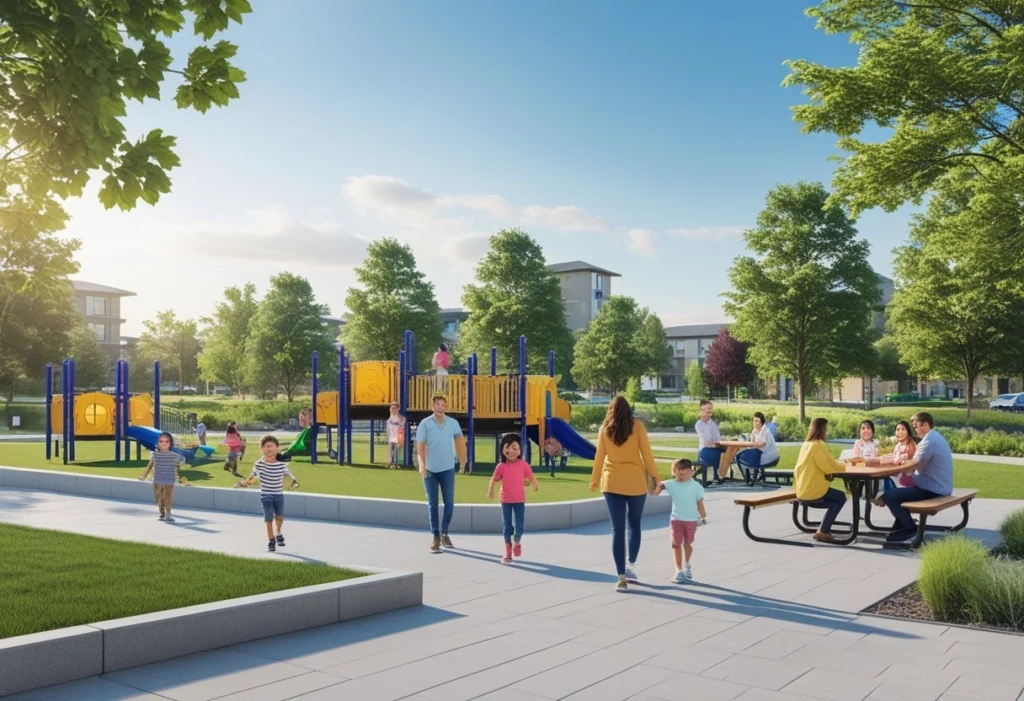
Parks and green space are distributed throughout residential areas, often within walking distance of homes. Many parks include age-specific play structures, open lawns, and connecting pathways suitable for cycling and strollers.
Winter maintenance, lighting, and accessibility features influence year-round usability. Nearby washrooms, parking areas, and trail connectivity are important when planning longer visits.
Recreational facilities provide structured programs, drop-in sports, and seasonal camps. Scheduling, pricing, and accessibility should be reviewed early, as popular programs fill quickly.
Parks, Amenities, and Local Living
Many neighbourhoods offer multiple green spaces within a 10–15 minute walk of most homes. Seek out parks with age-segregated playgrounds, fenced tot lots, splash pads and shaded picnic areas for comfortable afternoon visits.
Trails and off‑leash dog areas matter if you value family walks and pets — check if the community links to longer multi‑use paths for bike rides and stroller-friendly routes.
Consider winter maintenance: cleared sidewalks and groomed sledding hills make outdoor play possible year‑round. Note playground surfacing (rubber vs. wood fibre) for safety and accessibility. Finally, look for nearby washrooms and parking when you plan weekend outings or visiting with extended family.
Safety and Community Programs
Safety indicators vary by area and should be reviewed using neighbourhood-level data rather than citywide averages. Local reporting tools and municipal maps help residents understand patterns related to property incidents and public safety concerns.
Community-led programs, lighting upgrades, and patrol visibility contribute to overall security. Evaluating street design, traffic flow, and proximity to busy corridors provides important context beyond statistics alone.
Childcare and Daycare Facilities
Licensed daycare spots are scarce in high‑demand neighbourhoods, so proximity to multiple providers matters for availability and backup care. Look for facilities with up‑to‑date licensing, posted staff‑to‑child ratios, and transparent staff qualifications and turnover rates.
Ask about hours (extended care or early drop‑off), infant spaces versus preschool programming, and whether the centre follows an educational curriculum like emergent play or Montessori.
Prioritise locations that perform regular outdoor activities, maintain clear illness policies, and communicate via daily reports or apps. If you need care close to work, map commute time and waiting‑list procedures — many parents join lists months before a desired start date.
Safety and Neighbourhood Security
You can expect clear, local indicators of safety—crime statistics, community-led watch programs, and municipal investments in lighting and patrols. These factors together shape daily security where you live and influence where families feel most comfortable.
Crime Rates in Family Areas
Look at neighbourhood-specific crime rates per 100,000 residents rather than city-wide averages. Areas like Riverdale and some northwest suburbs report lower total-crime figures; other neighbourhoods nearer busy commercial corridors may show higher property crime counts.
Check recent reports from Edmonton Police Service (EPS) and municipal crime maps for trends over the last 12–24 months, focusing on violent crime and break-ins in family zones.
Compare rates for:
- Violent crime (assaults, robberies) — affects personal safety and school commute routes.
- Property crime (theft, auto-theft, break‑ins) — affects home security measures and insurance costs.
Use statistics plus local context: proximity to transit hubs, lighting, and commercial activity can explain spikes. That helps you decide whether a neighbourhood’s numbers reflect a persistent problem or isolated incidents.
Neighbourhood Watch Programmes
Find out if your target neighbourhood has an active Neighbourhood Watch or community safety group registered with EPS. Active groups post regular alerts on social media, coordinate block captains, and run sign-up lists for weekend patrols.
Ask the community league or condo board about membership levels and recent activity. High participation usually means faster reporting and greater deterrence of opportunistic crime.
Look for programmes that offer:
- Regular neighbourhood meetings and communication channels.
- Co‑ordination with EPS Crime Prevention Officers.
- Family-focused initiatives like school patrol volunteers and safety workshops.
If a neighbourhood lacks a formal programme, you can often start one through the community league with guidance from EPS.
Street Lighting and Patrols
Street lighting directly affects nighttime safety around parks, school routes, and bus stops. Check municipal maps or visit after dark to assess light coverage on sidewalks and crossings.
Edmonton Transportation periodically upgrades LED lighting and posts schedules online; confirm planned upgrades for your street to anticipate improvements.
Police and bylaw patrol presence varies by ward and time; review EPS neighbourhood policing schedules and community patrol reports.
Complementary measures to ask about:
- Timed streetlight maintenance and recent repair records.
- School-zone crossing guards and their hours.
- Frequency of visible EPS patrols or community constable visits.
These elements matter for your child’s walk to school, evening outdoor play, and overall peace of mind.
Housing Affordability and Cost of Living

Housing prices vary significantly by area, with inner-city locations commanding higher values due to proximity to employment and education hubs. Suburban neighbourhoods often provide more space at moderate price points.
Rental options include apartments, townhomes, and detached houses. Families seeking space often prioritize three-bedroom units near schools, parks, and transit routes.
Home Prices by Neighbourhood
Home prices in Edmonton differ notably by area. Inner-city neighbourhoods like Strathcona and Garneau typically have higher average prices due to proximity to downtown, historic homes and desirable schools. West and southwest suburbs such as Riverbend and Terwillegar offer mid-to-high price ranges driven by modern family homes and access to parks.
More affordable buying options often appear in mature communities like Mill Woods and Dover, where bungalows and townhomes lower the entry price. Expect detached homes in these areas to be significantly cheaper than comparable properties in new southwest developments. When comparing neighbourhoods, factor in property taxes, utility costs and potential renovation needs.
Rental Options for Families
Rental supply in Edmonton includes 1–4+ bedroom apartments, townhomes and single-family homes. Near post-secondary campuses and the river valley, you’ll find higher demand for smaller units; family-sized rentals concentrate in suburbs like Windermere and Castledowns. Townhomes and three-bedroom apartments are common choices for families balancing space and cost.
Rent levels change with proximity to transit and schools. Expect lower rents in older neighbourhoods but check for fewer on-site amenities. Use local listings to compare average rents for 2–3 bedroom units and prioritise walkability to schools, nearby parks, and bus or LRT access when choosing a rental.
Health Services and Medical Access in Edmonton

Hospitals and medical clinics are located throughout Edmonton, providing access to emergency care, diagnostics, and family medicine. Travel times vary by neighbourhood and should be considered when choosing a location.
Walk-in clinics, public health centres, and specialist services support routine care, vaccinations, and developmental screening. Availability of providers differs by area, so confirming clinic capacity is recommended.
Hospitals and Medical Clinics
Edmonton has major hospitals that handle paediatric and adult emergencies: Royal Alexandra Hospital, Sturgeon Community Hospital (in St. Albert/East of city), and the University of Alberta Hospital for specialized care and paediatric subspecialties. Travel times from central neighbourhoods range from 10–30 minutes by car; add transit time if you rely on buses or LRT.
Primary-care coverage includes community health centres and family clinics across family-oriented neighbourhoods such as Summerside, Riverbend, and Windermere. Look for clinics that offer extended hours and onsite diagnostic services (X-ray, lab draws) to reduce trips to emergency departments.
Tips to check: confirm after-hours arrangements, whether clinics accept new patients, and proximity to ambulance routes.
Paediatric and Family Health Providers
You can access paediatricians through referrals from family physicians or directly at hospital outpatient clinics attached to the University of Alberta Hospital and Royal Alexandra’s paediatric programs. Many neighbourhoods host walk-in clinics with pediatric experience for acute minor illnesses and immunizations.
Public health centres offer routine child vaccinations, prenatal classes, and developmental screening—services useful for families with infants and preschoolers. For mental health, community counselling and school-based supports are available; wait times vary, so ask about family support programs and community agencies that offer quicker access.
When choosing a neighbourhood, verify the number of practising family doctors within a 10–15 minute drive and the nearest walk-in clinic hours to ensure timely care for children.
Commuting and Transportation Options
Edmonton’s transportation options shape daily life: transit lines, highway access, and neighbourhood walkability determine commute times, childcare drop-offs, and weekend errands. You should prioritise a balance of reliable public transit, easy highway connections, and short walking distances to schools and shops.
Public Transit Connectivity
Look for neighbourhoods with LRT stations or frequent bus routes if you rely on transit. The Capital Line and Metro Line serve core and growing communities; areas near Clareview, Stadium, Churchill, and Southgate offer the most direct rapid-transit access to downtown, the university, and major hospitals.
Frequent bus service matters outside LRT corridors. Check peak-hour headways (15–30 minutes is preferable) and routes that link to schools and shopping centres. If you commute to a job on the south side or to St. Albert or Sherwood Park, confirm whether your route requires a direct bus or a transfer.
Consider transit-oriented developments if you want shorter walks to stops and mixed-use amenities. Also review park-and-ride options at key stations when you drive part of the trip; they reduce neighbourhood congestion and make multimodal commutes smoother.
Major Road Access
Identify the major corridors that match your commute: Yellowhead Trail (Highway 16) serves northwest–east travel, Anthony Henday Drive (Ring Road) gives full-city orbital access, and Whitemud Drive links central and south Edmonton. Living near an arterial that heads toward your workplace can cut daily drive time significantly.
Factor peak congestion and construction patterns. Morning and evening bottlenecks occur on Whitemud, Gateway Boulevard and provincial routes into downtown. Choose a neighbourhood with multiple route options to reduce single-point delays.
If you frequently drive to neighbouring municipalities, prioritise quick on-ramps to the Henday or direct access to highways. Adequate street parking, garage space and short driveway exits improve morning routines with kids and gear.
Walkability for Families
Prioritise neighbourhoods with schools, parks, grocery stores and playgrounds within a 10–15 minute walk. Short distances make school runs, stroller trips and after-school activities easier and safer. Look for sidewalks, signalised crossings and traffic-calming measures on streets around schools.
Mixed-use nodes with local shops and daycare within walking distance help reduce midweek car trips. Evaluate route safety: continuous sidewalks, curb cuts for strollers, and well-lit paths matter for evening returns.
Walkability scores and local maps give a quick read, but do an on-foot visit at peak times to verify crossing wait times and sidewalk conditions. Unexpected barriers — busy arterial crossings or missing sidewalks — can turn a short distance into an impractical daily chore.
Cultural Activities and Community Life
Edmonton offers active, local hubs where your family can join sports, festivals, and volunteer groups, plus accessible learning resources for all ages. You’ll find regular neighbourhood events, drop-in programs for kids, and free or low-cost educational workshops.
Community Leagues and Events
Community leagues run most neighbourhood rinks, playgrounds and hall programs; you can register your children for skating lessons, soccer, dance or seasonal camps directly through the league. Popular leagues in Terrace Heights, Summerside and Terwillegar organise outdoor movie nights, family BBQs and winter carnival days that build local connections.
Leagues also operate community rinks and outdoor skating shacks in winter, and maintain spray parks and playgrounds in summer. You can expect volunteer-led sports, seniors’ programs, and membership-driven fundraising that keeps fees low for families.
Check league websites or the City of Edmonton community calendar for registration dates, rink schedules and event permits. If you want a higher activity cadence, focus on established neighbourhoods like Riverdale, Edgemont or Strathcona where leagues run year-round programming.
Libraries and Learning Centres
Edmonton Public Library branches host regular storytimes, homework clubs and STEAM workshops that suit toddlers through teens. Many branches—Mill Woods, Stanley A. Milner, and Summerside—offer free drop-in programs, computer access and parent-child literacy sessions on set weekly schedules.
You can use library meeting rooms to join local parenting groups or book free one-on-one help with resumes and digital skills. Beyond libraries, community centres and local schools often run paid after-school tutoring and weekend arts classes you can book by term.
Look for branch-specific calendars online to reserve spots for popular programs and to learn about special events like author talks or summer reading incentives that give your children structured, educational activities during breaks.
New Neighbourhoods Near Stony Plain
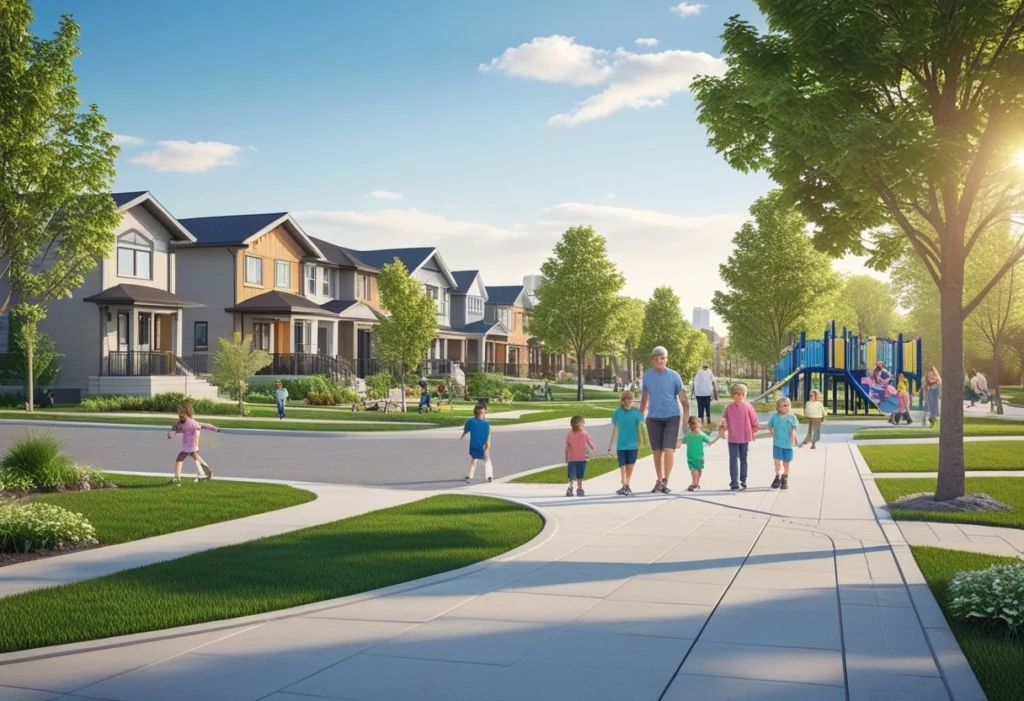
These areas offer newer housing, planned green space, and easier commutes to emerging job nodes. Expect modern schools, growing retail options, and a mix of single-family homes and townhouses suited to family budgets.
Chappelle Gardens
Chappelle Gardens sits in southwest Edmonton with quick access to Anthony Henday Drive and 111 Street, so your commute to major employers and shopping is straightforward. The neighbourhood features a mix of new single-family homes and duplexes with modern layouts, energy-efficient finishes, and fenced yards suitable for young children and pets.
Parks and pathways are integral to the plan; you’ll find pocket parks, a central green and planned stormwater features that double as play areas. Retail is still expanding, but nearby South Edmonton Common and Currents of Windermere are minutes away for groceries, services and family activities. New elementary schools are planned or recently opened, reducing travel time for school-aged kids.
Secord
Secord lies northwest of Edmonton’s core and prioritizes family-friendly design with wide sidewalks, interconnected pathways and several tot lots. Homes here range from affordable townhouses to larger single-family lots, giving you options if you’re starting or growing your family.
The community plan includes two schools, a neighbourhood park and a future commercial node along 127 Street. Transit service is improving as development progresses, making weekday school runs and extracurriculars manageable without long drives. Expect phased build-out over several years, so infrastructure and retail will continue to expand as more families move in.
The Uplands
The Uplands occupies land near Yellowhead Trail and 127 Street, positioned for easy access across the city and to the Edmonton International Airport corridor. You’ll find larger lots and higher-end single-family homes compared with many other new communities, appealing if you want more yard space and room for additions.
Design emphasizes natural features and green corridors, with preserved tree stands and multi-use trails planned for active families. Commercial amenities are limited early on, so you should anticipate driving a few minutes to established shopping areas until local retail develops. School sites and community services are in the planning stages, so check current municipal maps before making long-term commitments.
Leave a Reply